Photography
My life of photography through my cameras:
Halina 35X
Practika Super TL
Pentax ME Super
Canon Ixus Z90
Kodak Digital Science DC260
Nikon Coolpix 5700
Pentax *ist DS
Pentax Optio W10
Panasonic LUMIX LX5
Halina 35X
I've always enjoyed photography having bought my first 'proper' camera when I was about 12 years old, although I seem to remember using a ‘Brownie’ before then. It was a Halina 35X and it served me well. Browsing the Internet it seems that that old camera may well have been worth something now. I can’t remember what I did with it, although I probably gave it away.
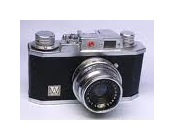
Reference to the Internet has reminded me of its features. It was cast metal and very heavy. Made in Hong Kong, it had a 45mm lens with an aperture of f16. The lens had to be independently cocked by a small lever on its side. It was a good seller in the 1950s and early 1960s.
Back to top
Practika Super TL
I moved next to a Practika. I seem to remember that it was Super TL and I kept this until the late 80s. It was good camera on which to learn the basics of SLR photography.
Thanks again to the Internet for an image.

Back to top

Pentax ME Super
My next camera, the Pentax ME Super, was a step-change in technology. With electronics just starting to infiltrate camera design in the form LED indicators in the viewfinder. I remember vividly the revelation when I first looked through the superb viewfinder and marvelled at the clarity of the framing and the accuracy of the split-image focusing system. I really enjoyed my ME Super and at times miss the relative simplicity and the ‘manual’ approach that, while still possible with modern SLRs, is usually foregone in favour of technological hand-holding. I certainly think I learnt more with my early manual SLRs than I would have done if I had started photography with one of the modern cameras. I still have the ME Super, although there is little attraction in going back to film given all the advantages of digital photography; although I know some people would disagree.

Back to top
Canon Ixus Z90.
A bit of a mistake this. Digital hadn’t really hit the mainstream and I bought this little APS (Advanced Film System) camera along with a Fuji AFS scanner as a setup to produce digital images. The equipment was bought with my 30-year employment award. The APS approach was, I think, technically flawed, and it really never caught on and was soon to be displaced by digital. Meanwhile the Fuji scanner was temperamental, and when Fuji decided not to issue updated Windows drivers (it was made in the days of Windows ME) the scanner became a piece of worthless junk. I got it working, on and off, with Windows XP, but it wasn’t worth the effort. I still have the camera and scanner but they are redundant.

Back to top
Kodak Digital Science DC260
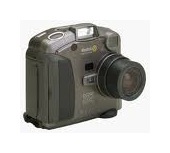
Although I lusted after a digital SLR these were initially far too expensive, as were most early digital cameras. My first foray into digital was a Kodak Digital Science DC260. It was quite an advanced camera at the time with 1.6 mega-pixels on offer. Although it was a quality camera it wasn’t an SLR, and other than the novelty of going digital it didn’t do much more for me. Helen’s mum got it for me on a trip to America, as it was cheaper there, although I had to buy a UK charger separately. I passed this camera on to my daughter
Back to top


 |
Pentax Optio W10
Having taken my better cameras fishing on occasions I decided that it might be a better idea to get a smaller compact. The Pentax Optio range seemed attractive as it offered a waterproof model, the W10. I bought one and although I had to take it back, as it was faulty out of the box, the replacement has performed admirably. In fact I use it quite a lot, such as when I don’t want to carry a larger camera, or when I just want ‘a camera with me’ without it being obvious. It fits nicely into a small case attached to my belt. It has endured water, fish slime and being dropped from a horse (it’s not advertised as drop proof!) and has come through unscathed.

Back to top
Panasonic LUMIX LX5
Although I love my Pentax SLR there are times when the bulk is not appropriate and, because of this, I have found myself using the W10 compact quite a lot. While the W10 is a good little camera it doesn’t offer much in the way of manual control and for a time I have been considering buying a new compact that allows more individuality. The Panasonic LX3 received very good reviews so when the improved LX5 became available this more or less made the decision for me.
The LX5 has also received exeptional reviews and is recommended as an ideal compact for professionals, or pro-ams, who want a compact with good lens and the option of full manual control. The Leica lens seems to be the same as that in the much more expensive Leica D-Lux 5 and the build quality is first class.

Back to top